Omanyte 52 / 62 Pokemon Card from Fossil Set
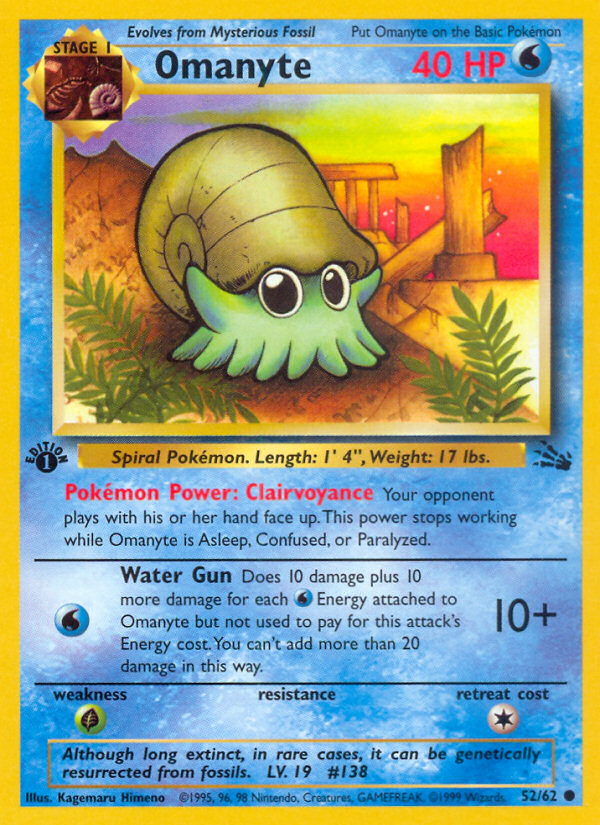
Omanyte is a Stage 1 Water-type Pokémon with 40 HP. It is part of the Fossil set from the vintage era (1999), illustrated by artist Kagemaru Himeno. The…
- Set: Fossil
- Number: 52/62
- Rarity: Common
Set
About the Omanyte Pokémon Card
Omanyte is a Water-type Pokémon card with 40 HP from the Fossil set, part of the Base series. It carries the collector number 52/62 and is classified as Common. The Fossil set was released on October 10, 1999.
The card includes the flavor text: “Although long extinct, in rare cases, it can be genetically resurrected from fossils.”.
Omanyte Pokémon Card Details
Card name: Omanyte
Card number: 52/62
Set: Fossil
Series: Base
Rarity: Common
Subtypes: Stage 1
Type: Water
HP: 40
Artist: Kagemaru Himeno
Release date: October 10, 1999
National Pokédex number: 138
Why Collect the Omanyte Pokémon Card?
Omanyte is most often collected as part of a complete Fossil set rather than as a standalone chase card.
Across the hobby, collectibility generally comes down to rarity, condition, artwork, and overall demand for the set.
Artwork and Illustration of the Omanyte Pokémon Card
Omanyte was illustrated by Kagemaru Himeno.
Artwork is one of the factors collectors weigh when deciding which copies to keep or send for grading.
Market Price and Value of the Omanyte Pokémon Card
The current aggregated market price for Omanyte is about $4.70. Recent listings range from roughly $0.85 (low) to $96.95 (high), with a mid-point near $3.99. These figures are aggregated from marketplace data and change over time; the live price and full price history are shown above on this page.
For context, the Fossil set has a median card value near
Pokémon cards are best collected for enjoyment first. Where value matters, it is typically driven by graded population, the popularity of the Fossil set, the availability of sealed product, and broader Pokémon TCG market trends.
Grading the Omanyte Pokémon Card
Whether Omanyte is worth grading comes down to condition. Before submitting a card, collectors usually check front and back centring, corner sharpness, edge wear, surface defects, and any print lines or factory imperfections.
Across the hobby, top grades such as PSA 10, BGS/Beckett 9.5–10, and CGC Pristine 10 generally command a premium over raw or lower-graded copies.
PSA has graded 3,997 copies of this card, of which 987 earned a PSA 10 — a gem rate of about 24.7%. These population figures were last refreshed on June 15, 2026. Population counts only rise as more copies are submitted, so the gem rate and totals shift over time; nothing here is estimated or back-filled.
How Rare Is the Omanyte Pokémon Card?
As a Common card, Omanyte was printed at one of the highest frequencies in its set — commons form the base of a set's print run and are pulled most often from booster packs.
Population data is one concrete measure of scarcity: PSA has graded 3,997 copies to date.
Other Printings of Omanyte
Omanyte appears on more than one card across the catalog. Other printings include Legend Maker 60 (around $84.43), Skyridge 41 (around $82.11) and Legendary Collection 57 (around $76.01).
These are distinct cards rather than a single listing; compare the set, collector number, and rarity when identifying a specific copy.
Final Thoughts on the Omanyte Pokémon Card
The Omanyte pokémon card is a Common card from the Fossil set (Base series). It is a straightforward addition for collectors completing the Fossil set. Its current aggregated market price is about $4.70; the live figure and full price history appear above on this page.
Frequently asked questions
What set is the Omanyte card from?
Omanyte is from the Fossil set (Base series), numbered 52/62 with the Common rarity.
What rarity is the Omanyte card?
Omanyte is classified as Common.
How much is the Omanyte 52/62 card worth?
The current aggregated market price is about $4.70, within a recent range of roughly $0.85 to $96.95. The live figure and full price history appear above on this page.
Is the Omanyte card worth grading?
It can be, if the card is well-centred and free of noticeable edge, corner, or surface flaws. PSA has graded 3,997 copies so far, with about 24.7% reaching PSA 10. Top grades typically command a premium over raw copies.
What is the PSA population for Omanyte?
PSA has graded 3,997 copies, of which 987 are PSA 10 (a gem rate of about 24.7%). These figures were last updated on June 15, 2026.
How rare is the Omanyte card?
As a Common card, Omanyte was printed at one of the highest frequencies in its set — commons form the base of a set's print run and are pulled most often from booster packs.
When was the Fossil set released?
The Fossil set was released on October 10, 1999.
Are there other printings of Omanyte?
Yes. Omanyte appears on 14 other cards across the catalog. Compare the set, collector number, and rarity to identify a specific copy.